
Careers, Enrichment & Wellbeing
“Mighty Oaks from Little Acorns Grow”
Old English Proverb

Our careers and enrichment provision at SVA Sixth Form is built around five key strands:
- Registration
- Careers Education, Information, Advice & Guidance (CEIAG)
- Unifrog
- Student Voice
- Enrichment
Daily Registration
- ‘Motivation Mondays’ (current affairs quiz)
- ‘Target Tuesdays’ (careers & life skills lessons)
- ‘Wellbeing Wednesdays’ (PSHE: Personal, Social & Health Education)
- ‘Thought-Provoking Thursdays’ (praise, religious, study skills & cultural events)
- ‘Fitness Fridays’ (physical and mental health sessions)
Through our programme students will also become aware of Fundamental British Values (including democracy, the rule of law and tolerance) and Social, Moral, Spiritual & Cultural (SMSC) awareness. Our PSHE, wellbeing and careers programs have been developed in line with the Career Development Framework, Gatsby Benchmarks and PSHE Association guidance.
We have additionally embedded the Cambridgeshire Local Authority Standing Advisory Council on Religious Education (SACRE) guidance as part of our registration plan, including a visit to a local Christian Church, assemblies on religious education and talks from speakers of different faiths.
Careers Education, Information, Advice & Guidance (CEIAG)
We are proud to deliver the Gatsby Benchmarks & Baker Clause in our careers program and offer the following at SVA Sixth Form:
Year 12 | Year 13 |
Our aim in year 12 is to develop knowledge of post-16 opportunities and develop the soft skills needed to explore them. | Our aim in year 13 is for every student to have a post-18 plan and provision that is right for them. |
External speakers visit us, including alumni, subject-specific talks and apprenticeship providers | |
Target Tuesdays in registration provide bestpoke advice & guidance | |
Unifrog is used to guide careers research in response to local labour market information | |
We offer a dedicated enrichment curriculum | |
Departments link topics to careers at relevant opportunities and offer subject-specific careers talks with external visitors | |
Academic Mentoring is delivered 3 times per year by sixth form tutors with a specific focus on careers/futures | |
Apprenticeships, CV building and UCAS sessions are delivered in both years 12 and 13 | |
Work Experience Week & Futures Day | Meetings with a University Admissions tutor for personal statement and portfolio guidance if required |
A variety of University trips (including Cambridge, London, Lincoln, Bedford and more in recent years) | Meeting with a L6 Careers Advisor |
UCAS Convention Trip | Apprenticeships Careers Fayre trip |
This furthers the CEIAG offer in the main school as our L6 Careers Advisor is accessible to both Year 7-11 and to Year 12-13. We additionally use GCSE results to determine our initial group of students we target with an Oxbridge visit, and our work experience week in Year 12 mirrors that in Year 10. Students in the Sixth Form can attend the Meet the Professionals talks that are offered in the main school and our careers and futures week are the same for all year groups at the Academy. Where Sixth Form differs is our focus specifically on securing a solid post-18 plan for all of our learners, and for around 65% of our learners in the last 3 years this has been university.
The Gatsby Benchmarks are as follows:
- A stable careers programme
- Learning from career and labour market information
- Addressing the needs of each pupil
- Linking curriculum learning to careers
- Encounters with employers and employees
- Experiences of workplaces
- Encounters with further and higher education
- Personal guidance
The Baker Clause ensures that all students are able to explore impartial career guidance across both vocational and academic pathways.
Unifrog
Students will use Unifrog to guide the UCAS and Apprenticeships process, to receive personalised feedback on their personal statements and CVs, as well as access to up-to-date jobs and careers information from the local area. Unifrog is used extensively during Year 12 to begin our careers and post-18 destination research process. It is an important part of the UCAS, CV and covering letter guidance process in Year 13.
Student Leadership and Voice
Student Leaders at the Academy Sixth Form make up an important part in ensuring our celebrations are designed in a way that is appropriate for the particular cohort. They work together on student voice at the Academy both in a pastoral sense (led by Student Leaders) and in an Academic sense (led by Student Leaders and Subject Reps in partnership) so that our registration plan and teaching and learning reflect student views and concerns. The students also have a direct say in how we celebrate their time with us at the end of Year 13, such as whether or not to have a prom. These processes are designed to allow students to have a say over the way their Sixth Form operates. Recent examples of what student voice asked for, and what we delivered, can be found below:
You said… | We did… |
You wanted more creative arts careers guidance | Arranged 1-1 appointments with a L6 Careers Advisor to talk about this, and arranged a visit to the University of the Arts London |
The computers in the silent study room can be too slow | Requested and secured, refurbished computers in the silent study room |
You wanted more opportunities to visit universities and Sixth Form trips | Arranged additional trips to London and Oxbridge, as well as an international trip to Washington DC |
You wanted more guidance on non-uni options after Sixth Form | Arranged Amazing Apprenticeships to come in 3 times per year to give non-university related talks. We also ran a CV and apprenticeships workshop on Futures Day |
You wanted more sex education to be delivered during registration | Added extra sex education topics to our registration plan |
Can we have access to a small library? | Prepared a small library in the Sixth Form centre with both fiction and non-fiction books available to borrow |
Some students struggle with getting a good amount of quality sleep | We ran a circadian rhythms assembly focused on getting good sleep |
Students would like a bullying registration task | We ran a bullying form time |
Students would like more politics in registration | We ran a COP 27 PowerPoint and a Gaza conflict PowerPoint. We added a debate on Donald Trump to the registration plan |
Students would like a sporting enrichment option | We ran an array of clubs as enrichment, which included rugby, football and netball |
Students would like more independent study guidance | More form time activities done including a rolling ‘Tuesday Study Skills’ booklet for 6 months |
Can we have a suggestions and anonymous reporting box | We now have one |
Students asked for a coercive control registration activity | We ran a coercive control week and a healthy boundaries assembly |
Students said they needed access to faster computers during study periods | We bought a brand new suite of computers for one sixth form room and refurbished another set |
More Detail On Our Senior Students
The roles available each year are:
- Student Leaders
- Subject Reps
Please see below for the job descriptions of each role. If you are interested and have any questions, please talk to Hayley or the current student in that role.
Student Leaders – Roles & Responsibilities:
- Co-ordinate student voice and contribute to the registration plan
- Expect high standards of SVA students including Oak students
- Supporting events such as open evenings and induction days
- Liaising with the Principal and other Teaching & Learning Responsibility holders on whole school matters
- Delivering a Sixth Form assembly once/twice a year and organising end-of-year-13 leavers events
- Organise social events in the Sixth Form
Subject Reps – Roles & Responsibilities:
- Contributing to Sixth Form student voice
- Expect high standards of SVA students including Oak students
- Represent the subject at open evening and other key events
- Speak to prospective students who want to know more about the subject, including visiting Year 11 tutor groups on request
- Support in the Year 12 induction process
- Sharing good practice with other senior students
- Engage in other duties as reasonably requested by subject teachers
Dasia – Student Leader
Edith – Student Leader
Freya - Mental Health Leader
Lydia - Academic Student Support
Rafa - Academic Student Support
Enrichment
Enrichment provides you with the opportunities to develop your skillset and become a well-rounded, highly employable young person. All students must complete their enrichment on Wednesday period 5.
In addition, in the Summer term of Year 12, students will engage in a week’s work experience placement, access a Futures Day, and will be offered the Appointed Persons First Aid qualification. We also occasionally have visitors to the Academy such as the Bank of England, Saffery Champness, a range of universities and others providing enriching talks.
Enrichment options listed below are subject to availability, staffing and student uptake:
- Extended Project Qualification
- Core Maths
- Core English
- MOOCs
- Duke of Edinburgh
- GCSE Maths or English resit
- Class and Student Support
- Science Technician Support
- Media Technician Support
- Lunchtime clubs
- Community Volunteering
- Mentoring
- Lunch duties
- Reception duty
- Sparx Maths and English Support for KS3
- Sports Rotation
- Sports Leadership Award
- Life Skills
Please find below some useful wellbeing links and speak to a member of the Sixth Form team if we can help – our door is always open.
Sixth Form Welfare Dog – Bramble
Students in the Sixth Form have access to Bramble The Bordoodle, Sixth Form welfare/therapy dog, who joined the Academy in March 2023.
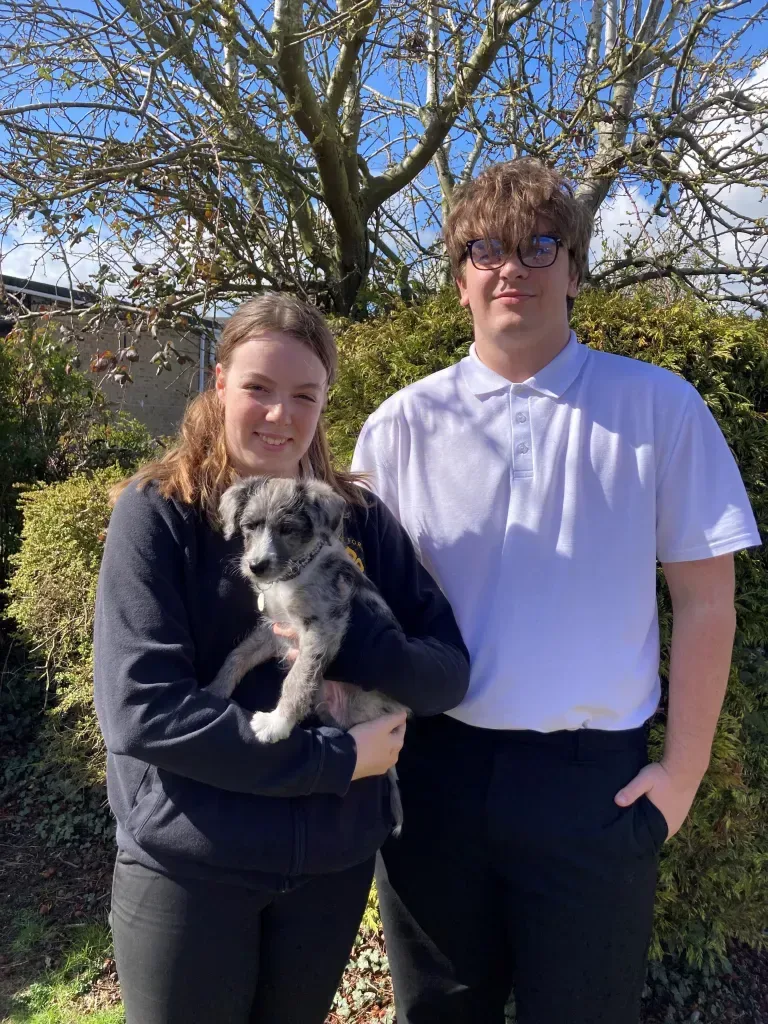

See Bramble in the Meridian Trust video of Welfare dogs below:
Bramble Video, Along With Other Trust Welfare Dogs
Revision Tips:
Retrieval Practice – which is about trying to find out what you know, then revise what you don’t
The suggestion is to revise by choosing a topic (using the spec or contents page in the textbook), making a mindmap from memory in one coloured pen then use the textbook page and another coloured pen to add the new information. This will tell you what you need to focus on in your revision of that topic.
The Ebbinghaus Forgetting Curve & Maintenance Rehearsal – which is about WHEN to revise WHAT
The suggestion is to revise the same thing several times over the course of a week to help move it into your long term memory. For example, choose a topic or two and revise them on Monday. Revise them again on Wednesday and revisit them a final time at the weekend. Rather than revising 3 sets of information, that 1 set of information is getting really in-depth focus and coverage 3 times over, making its transition into your long-term memory smoother. This will help longer-term when you return to the information later.
Application Practice – which is about USING the stuff you’ve revised
It is important to put your revised content into action using practice exam questions – Practice, practice, practice is the recipe for success. This should be a conscious and deliberate part of your revision.
Recognition versus Recall – which is about MEANINGFUL ways of revising
Recognition is an important skill – This means seeing a textbook page and realising “oh yes, I know what this is about, I remember that information.” It is important as you need to go over content repeatedly, you can’t just learn from nothing. However, recall is an equally (if not more) important skill because it’s what exams need from you. This means being able to say, from memory, without prompts, “oh yes, X topic is about this…” and explaining it fully. There are 2 different skills and students often practice recognition (lots of mindmaps etc.) but don’t practice recall enough. To do this, practice without access to books/notes (self-mark against the markscheme), produce flash cards (as you have to ‘recognise’ information to make the flash card) then ‘recall’ the information to test yourself using them. This can also be done with friends or groups, mindmapping from memory in one colour then ‘recognising’ (adding to it from the textbook) in another